Technology Financing Markets How It Works Talk to Us
π

The system that runs without the grid.

Six integrated layers from atmospheric moisture to facility power. No external water supply. No fuel deliveries. No interconnection queue. The system tightens its own loop as it runs.

System Architecture

Six layers. One integrated deployment.

Every Meridian Pi system is engineered around the facility's actual load profile, reliability requirements, site conditions, and deployment schedule. The stack reads from foundation to output -- Generation at the base, Facility at the top.

6
Facility Layer -- Output

Data halls, AI GPU clusters, cooling systems, manufacturing loads, and mission-critical operations. Power and fiber delivered directly to your equipment at the required capacity and reliability grade.

Output
5
Connectivity Layer

1-100 Gbps dedicated high-speed fiber access delivered as part of every Meridian Pi deployment. AI compute and critical infrastructure require reliable, high-capacity connectivity alongside reliable power -- both arrive in one package.

1-100 Gbps
4
Intelligence Layer

Microgrid controller, load forecasting, dispatch optimization, remote monitoring, black-start sequencing, and carbon accounting. The system manages itself -- balancing generation, storage, and demand in real time.

Microgrid Control
3
Dispatch Layer

Solid oxide fuel cells for baseload power. PEM fuel cells for peaking response. Lithium battery buffer for transient load. Black-start capable with no external grid assistance required. Water produced during hydrogen conversion is captured and returned to the generation layer -- closing the loop.

Fuel Cells + BESS
2
Storage Layer

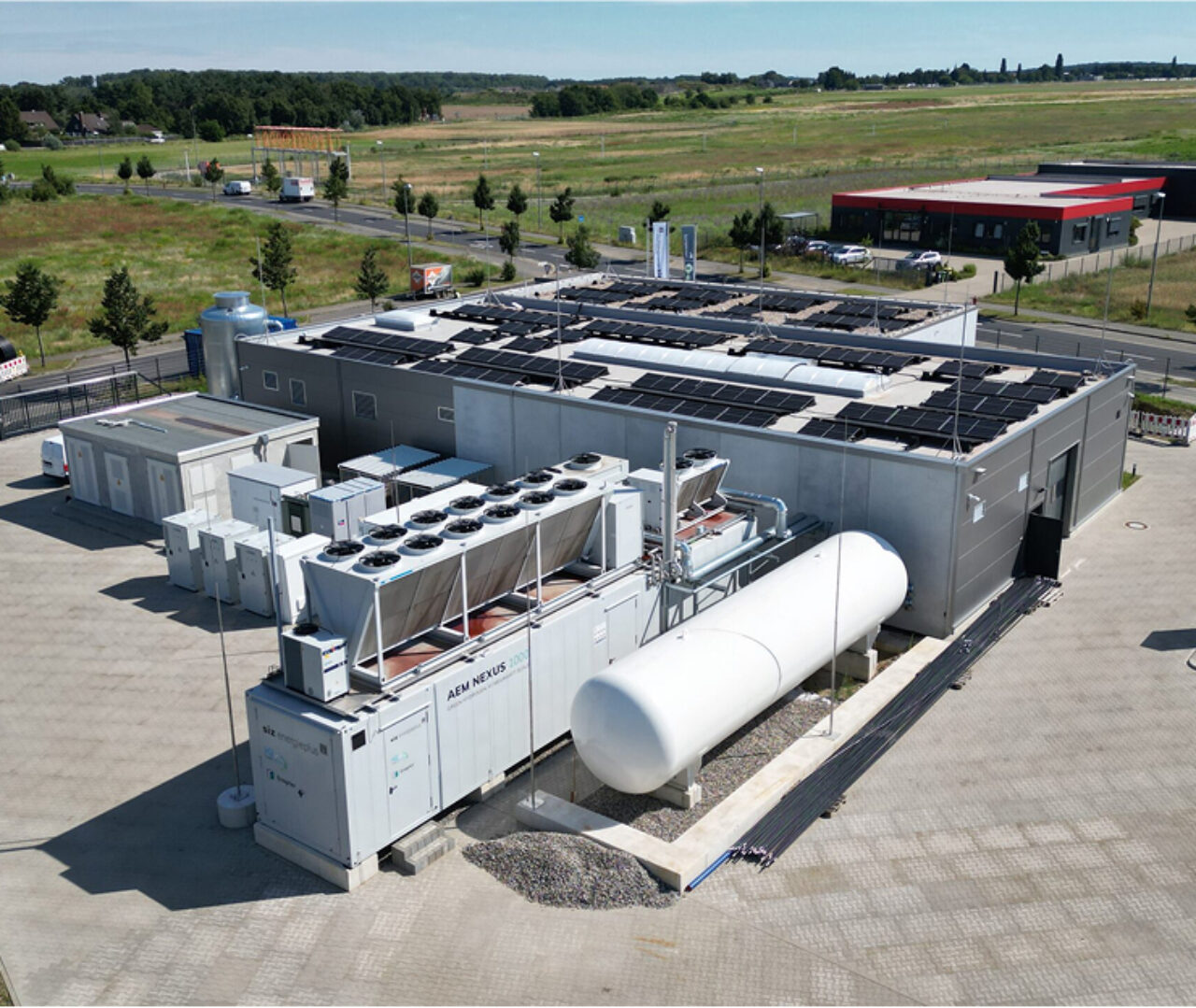
Compressed hydrogen stored up to 700 barg in Type IV carbon fiber composite pressure vessels. Battery energy storage for short-duration buffer. Combined storage architecture delivers 30+ days of autonomous endurance without any renewable generation input.

Up to 700 barg
1
Generation Layer -- Foundation

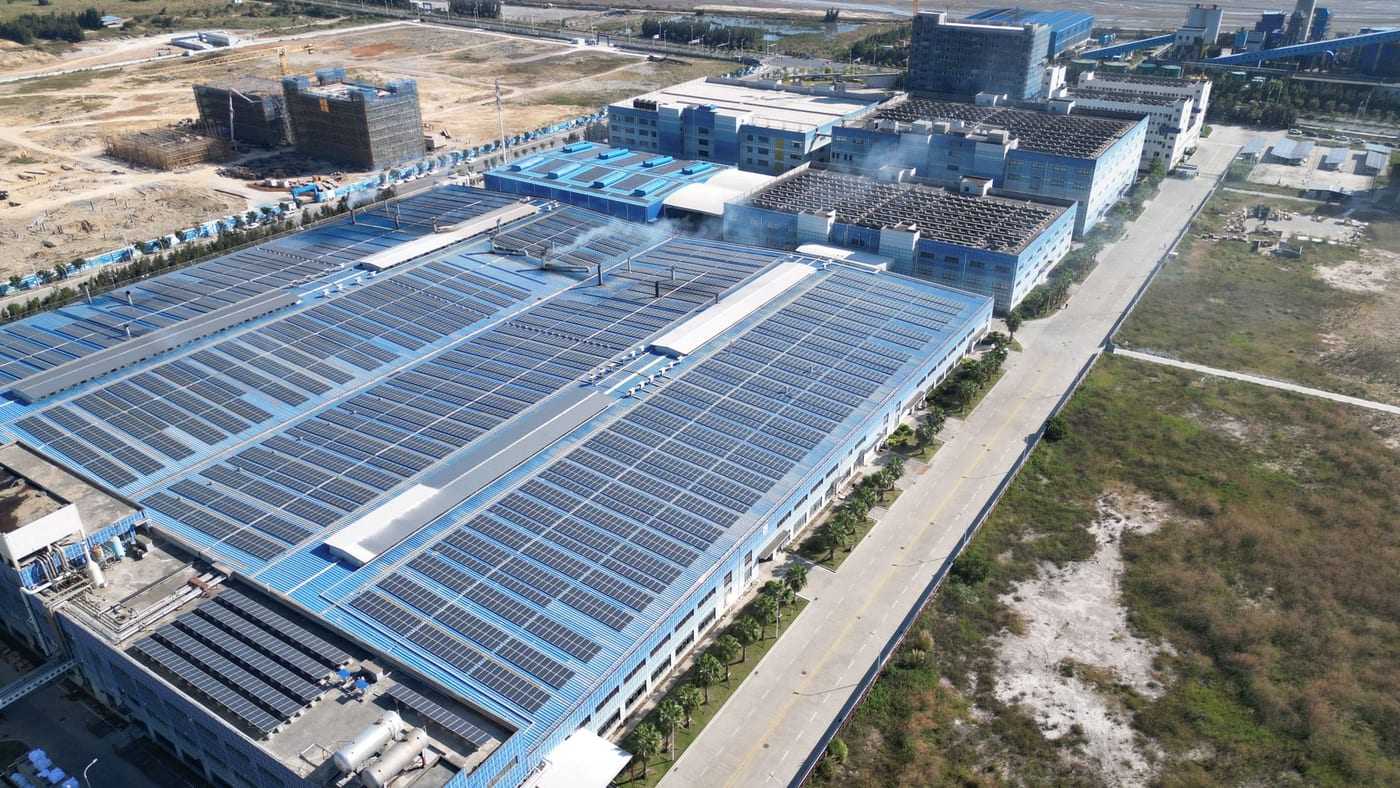
Solar PV arrays paired with atmospheric hydrogen production. Air is drawn in, moisture extracted, water purified to ASTM D1193 spec, and fed to an electrolyzer producing hydrogen at 99.999% purity. Water expelled during fuel cell dispatch is captured and recirculated back -- the system becomes increasingly self-sufficient as it runs. No external water supply. No fuel delivery. No grid dependency.

Foundation
No water line. No fuel truck.
No waiting.
Layer 1 -- Generation

Hydrogen from the air itself.

Standard electrolysis requires a dedicated water supply -- deionized, continuously fed, and dependent on local infrastructure. Meridian Pi systems extract moisture directly from the atmosphere, eliminating the water logistics problem entirely.

Minimum 17% relative humidity required; optimal at 40-90% RH
Water purified to ASTM D1193-06 Type IV before electrolysis
Hydrogen produced at 99.999% purity
Water recovered from fuel cell dispatch recirculated to electrolyzer -- closed loop
Input power is fuel-agnostic -- solar, wind, or grid all work
No external feedstock. No fuel delivery. No site infrastructure dependency.
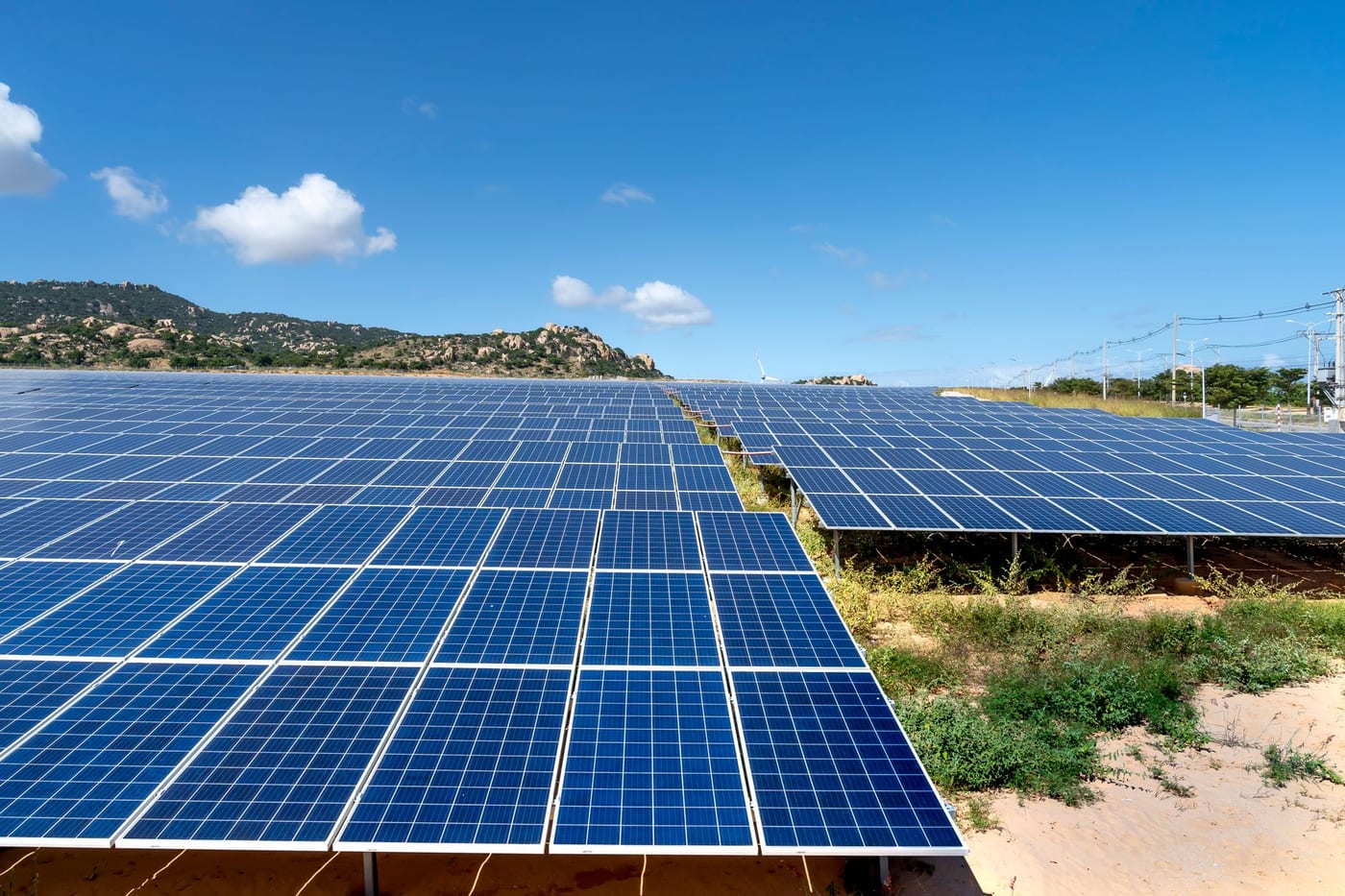
Atmospheric hydrogen generation
Layer 2 -- Storage

30+ days without touching the grid.

Compressed hydrogen storage provides the energy density required for extended autonomous operation. Combined with a lithium battery buffer for transient response, the storage architecture is designed around the facility's actual reliability requirements -- not a generic specification.

Compressed hydrogen up to 700 barg in Type IV composite pressure vessels
Carbon fiber overwrap rated for high-cycle service
Lithium battery buffer for sub-second transient response
30+ days autonomous endurance without renewable generation input
Modular storage expansion without system shutdown
Hydrogen storage vessels
Layer 3 -- Dispatch

Black-start capable. No grid assistance required.

Fuel cell dispatch provides continuous, clean power from stored hydrogen. The dual-technology architecture separates baseload from peaking, optimizing the system for both steady-state efficiency and rapid response. The system can restart from zero without any external grid connection.

Solid oxide fuel cells (SOFC) handle continuous baseload generation
PEM fuel cells handle peaking demand and rapid load response
Lithium buffer covers sub-second transient events
Black-start capability -- full restart without grid assistance
Water produced during dispatch captured and returned to electrolyzer
Zero combustion. Zero GHG emissions at point of use.
Fuel cell dispatch system
Carbon Capture

Net-zero is the baseline, not the goal.

Applicable Meridian Pi system configurations incorporate carbon capture, qualifying for §45Q carbon oxide sequestration credits alongside the hydrogen and clean electricity credits in the project financing stack. For the right site, the system doesn't just avoid emissions -- it removes them.

§45Q carbon oxide sequestration credit on qualifying configurations
Voluntary and compliance carbon market monetization available
Stacks with §45V, §48E, and §48C credits in the same project
Carbon accounting integrated into the Intelligence Layer
Applicable configurations determined during site engineering
Carbon capture infrastructure
The system tightens
its own loop.
Over time.
Technology Partnership

DoD-validated. Field-deployable.

Meridian Pi deploys atmospheric hydrogen infrastructure through a strategic partnership with NovaSpark Energy Corporation -- developer of the world's first mobile and modular atmospheric hydrogen generator. The platform has been validated by the Department of Defense and recognized by AFWERX and the Defense Innovation Unit.

AFWERX Award Winner Defense Innovation Unit Lockheed Martin SBIR Partner Black Start Capable 72-hr Deployment Patented Platform
Powered by
NOVA
SPARK
ENERGY CORPORATION
Get Started

Ready to qualify your site?

Tell us your load requirements, location, and target energization date. We'll determine whether your project is a fit for a Meridian Pi deployment.

Qualify Your Site See financing options